Accident and trauma cleanup in Desert View, Phoenix, AZ is the careful removal of blood and bodily fluids left after an injury or accident inside a home or apartment, followed by disinfection of surfaces that can be saved and removal of material that cannot be made safe. The first practical step in Desert View is to close the affected room, keep people and pets out of it, avoid touching anything inside, and call to describe the room, the surfaces involved, and how the crew can reach the property. For a home in Desert View with tile, laminate, and carpet across family rooms and bedrooms, the plan accounts for how fluid behaves on each surface, since tile joints, wood seams, and carpet fibres each hold contamination in a different way. Once emergency services have finished in Desert View, the next call should describe what happened in general terms, which room is affected, whether broken glass or damaged fixtures are mixed with fluid, and whether anyone else needs access to the home.
For homes in Desert View with two-storey family plans with bedrooms upstairs and living below, the crew must also plan how to move removed material out of the home without passing it through living rooms, kitchens, or shared spaces that are still in use. A room in Desert View with tile, laminate, and carpet across family rooms and bedrooms needs an assessment that looks beyond the visible stain, checking seams, joints, under-furniture areas, and adjoining surfaces where fluid may have traveled out of sight. The service in Desert View is indoor, room-focused work, and any question about an outdoor area, a vehicle, or a different type of scene should be raised on the call so the household receives a straight answer about what is covered. In Phoenix, seasonal conditions in Desert View mean that timing, ventilation, and drying all need local judgement, rather than a single national instruction applied without regard to heat, humidity, dust, or rain. In Desert View, the first hours after release matter, because fluid settles into porous material, odour builds in a closed room, and delay can turn a contained job into a wider one involving adjoining rooms. The neighborhood character of Desert View shapes that reality, since newer suburban streets with desert landscaping and open views, and each property type brings its own mix of rooms, surfaces, and shared spaces to plan around.
A household in Desert View should not feel pressed to decide about every item in the room at once, since the assessment stage exists to separate what can be disinfected, what must be removed, and what needs a household decision. In Desert View, heat, humidity, dust, or rain can each push a contaminated room in a different direction, so the crew checks temperature, airflow, and moisture in the room rather than assuming conditions from the weather outside alone. In Desert View, the difference between a room that is wiped and a room that is properly handled is documentation, containment, removal of what cannot be saved, disinfection of what can, and a final check before the room returns to use. The work described on this page for Desert View covers indoor rooms in homes and apartments, and it is written for households that need to understand what happens next, what to avoid doing, and what questions to ask on the first call. The layout of homes in Desert View adds another layer, with two-storey family plans with bedrooms upstairs and living below, so a crew must know which rooms connect, which doors should stay closed, and which routes keep clean areas clean. In Desert View, a thorough assessment will also note ventilation, plumbing, and fixtures near the affected room, since fluid, water, or damage to a fixture can extend the affected area beyond the first visible patch.
Containment in Desert View is not only about the affected room, since driveways, garage entries, and shared townhome courts, and the crew must protect corridors, lifts, stairwells, driveways, and neighboring units from any transfer during removal. For households in Desert View, the most useful early advice is simple: keep the room closed, keep people and pets out, do not move furniture or bedding out of the room, and do not run fans or cooling systems in a way that blows air from the room through the rest of the home. Homes here include suburban homes and townhomes on the northern residential edge, and that mix matters for trauma cleanup, because a fluid spill behaves differently on tile, wood, carpet, and concrete, and differently again where walls, corridors, or neighbors share the same building. Trauma cleanup in Desert View requires patience with the household as well as care with the room, because the people calling are often tired, distressed, or managing other urgent tasks at the same time. In Phoenix, the work in Desert View is planned for suburban homes and townhomes on the northern residential edge and for monsoon dust and sudden rain on newer suburban roofs, which is why two homes in the same city can still need different sequences, different containment, and different checks at the end. The pages for Desert View are written to help a household recognise when professional help is needed, what to do while waiting, and what a thorough job looks like from assessment through to handover.
Accident and trauma cleanup in Desert View: local factors
Building stock in Desert View
The layout of homes in Desert View, with two-storey family plans with bedrooms upstairs and living below, decides which doors stay closed, which adjoining rooms need checking, and which route through the home keeps unaffected areas unaffected. The work in Desert View is staged so that assessment comes first, containment second, removal third, and disinfection and checking last, with the household informed at each stage rather than left to guess. For a household in Desert View, the most practical local advice is to describe the building type, the floor, the room, and the surfaces on the first call, since those four details shape the plan more than any other information. Older materials in parts of Desert View can hide fluid in cavities, under flooring edges, and behind fixtures, so the assessment looks for hidden routes rather than trusting the visible boundary of a stain. Seasonal rain, dust, or humidity in Desert View can also affect the building around the affected room, so the crew checks for water routes, roof leaks, or drain issues that could complicate the cleanup. Access in Desert View is shaped by driveways, garage entries, and shared townhome courts, and that detail decides where the crew stages, which entry is used, and how removed material leaves the property without crossing clean rooms. In Desert View, the difference between neighborhoods is real, because suburban homes and townhomes on the northern residential edge and driveways, garage entries, and shared townhome courts together create a combination that no other neighborhood in Phoenix repeats in exactly the same way.
Surfaces and hidden routes
In Desert View, the crew checks ceiling, wall bases, and floor edges where fluid may have splashed or run, because gravity and movement spread fluid beyond the spot where a person first notices it. Seasonal conditions in Desert View matter because monsoon dust and sudden rain on newer suburban roofs, and the crew adjusts containment, airflow, and drying to the room in front of them rather than to a generic seasonal note. The crew in Desert View works room by room, documenting what was found, what was removed, and what was disinfected, so the handover summary matches the actual work rather than a generic description. Newer materials in parts of Desert View can look deceptively clean, because a sealed tile or polished concrete surface may still hold fluid in joints, drains, or expansion gaps that need checking. The character of Desert View, with newer suburban streets with desert landscaping and open views, affects discretion and staging, since arrival, parking, and waste handling should not draw unnecessary attention to a household already dealing with a difficult event. The crew working in Desert View checks adjoining rooms and hallways for transfer, because fluid on shoes, wheels, or moved items is a common route by which a single room becomes a wider problem. The surfaces of Desert View, including tile, laminate, and carpet across family rooms and bedrooms, each hold fluid differently, and grout lines, wood seams, carpet fibres, and concrete pores are checked as routes, not assumed clean after a surface wipe.
Access and staging
Storage, closets, and under-bed areas in Desert View homes are checked where they adjoin the affected room, since fluid and odour do not respect the neat boundary of a room plan. In Desert View, suburban homes and townhomes on the northern residential edge define the starting point, because the crew must know whether fluid landed on tile, wood, carpet, concrete, or a mix of surfaces before choosing a removal and disinfection sequence. In Desert View, ventilation must be handled with care, because blowing air from the affected room through the rest of the home can spread odour and fine material, while sealing a hot or humid room without any control can worsen conditions inside it. In Desert View, odour is treated as information, not only as a nuisance, since its location and strength can point to fluid in a hidden space, under a fixture, or inside a porous item. The neighborhood pattern of Desert View, with newer suburban streets with desert landscaping and open views, means that some properties are close together and some are set back, and staging must fit the property rather than assuming a single standard setup. In Desert View, the assessment also notes whether broken glass, sharp debris, or damaged fixtures are mixed with fluid, since those items change the order of removal and the protective methods used. The building stock of Desert View means that plumbing, drains, and fixtures near the affected room may also need attention, especially where a fixture was damaged during the accident itself.
Climate and timing
In Desert View, furniture and belongings in the affected room are assessed item by item, with hard, non-porous items treated differently from soft, porous items that absorbed fluid. In Desert View, bathrooms, kitchens, and bedrooms each present a different cleanup challenge, since fixtures, cabinets, bedding, and soft furnishings each respond differently to fluid and to disinfection. Drying in Desert View is part of disinfection, not an afterthought, since a surface that stays damp after cleaning can hold odour and growth, especially where monsoon dust and sudden rain on newer suburban roofs. The local plan for Desert View respects the household, the building, and the neighbors, balancing thoroughness in the affected room with care for every space around it. In Desert View, the crew does not assume that a room is safe because it looks tidy after an initial wipe, since contamination in seams, padding, and soft material remains invisible without a proper check. In Desert View, the crew agrees timing, access, and privacy details on the first call, so the household knows when the visit happens, who will be present, and how the work will be staged. The plan for Desert View also considers how the household will use the home after handover, including which rooms can be used during the work and which room stays closed until the final check.
What accident and trauma cleanup covers in Desert View
The service in Desert View covers fluid on floors, walls, fixtures, furniture, and bedding, and it checks adjoining surfaces, seams, and soft material where fluid may have traveled out of sight. In Desert View, the affected room is assessed first, then contained, so that removal and disinfection do not spread fluid into clean rooms, corridors, or neighboring units. Odour linked to the affected room in Desert View is addressed by removing the source material and disinfecting the surfaces that held it, rather than by masking the smell in a room that still holds contamination. In Desert View, the service is for accidents and injuries at home, not for scenes that remain under investigation, and any scene that officials have not released should stay untouched until release is confirmed. The work in Desert View includes removal of contaminated material that cannot be disinfected, disinfection of hard surfaces that can be saved, and disposal of removed material through a proper waste route. Hard, non-porous surfaces in Desert View, such as tile, sealed stone, metal fixtures, and sealed wood, can often be cleaned and disinfected, subject to a check of joints, grout, and fixture bases. The work in Desert View includes a final check before handover, with a plain-language summary naming the rooms handled, the items removed, the surfaces disinfected, and any room that still needs attention. In Desert View, the crew documents the scope before work begins, so the household understands which rooms are included, which items are likely to be removed, and what the final check will cover. Coverage on this site is limited to the 15 verified neighborhoods in Phoenix, Arizona, with coverage confirmed by ZIP.
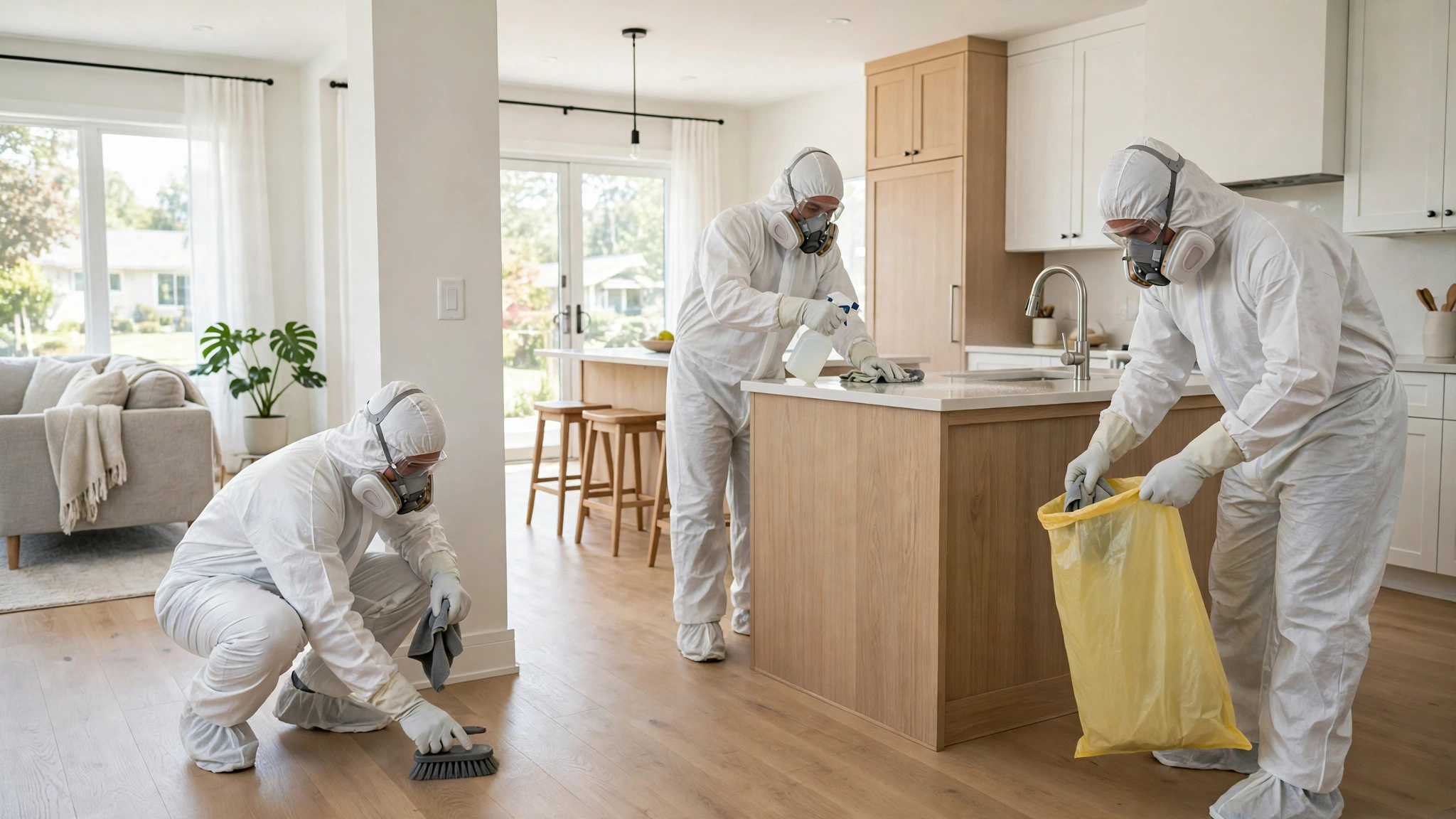
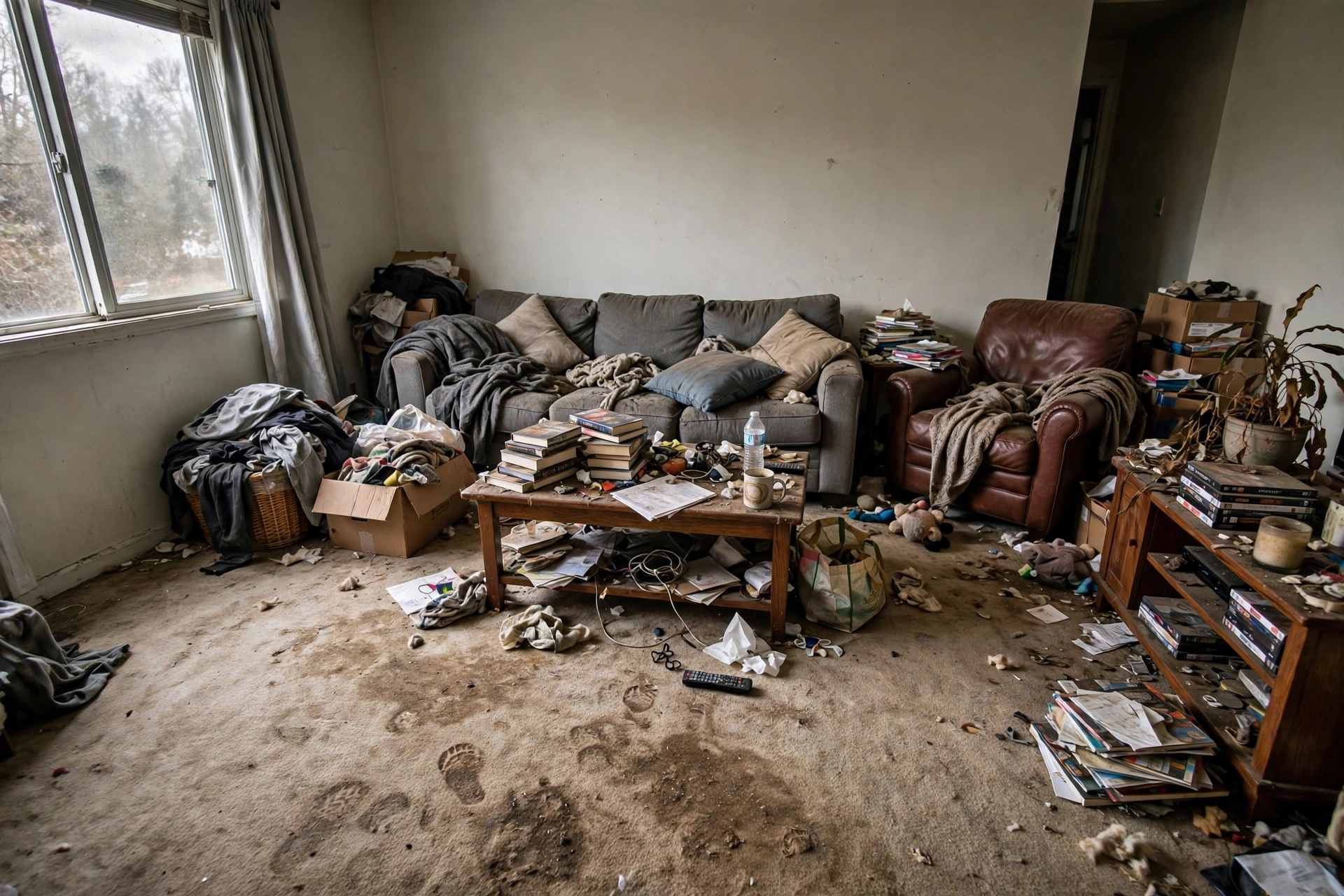
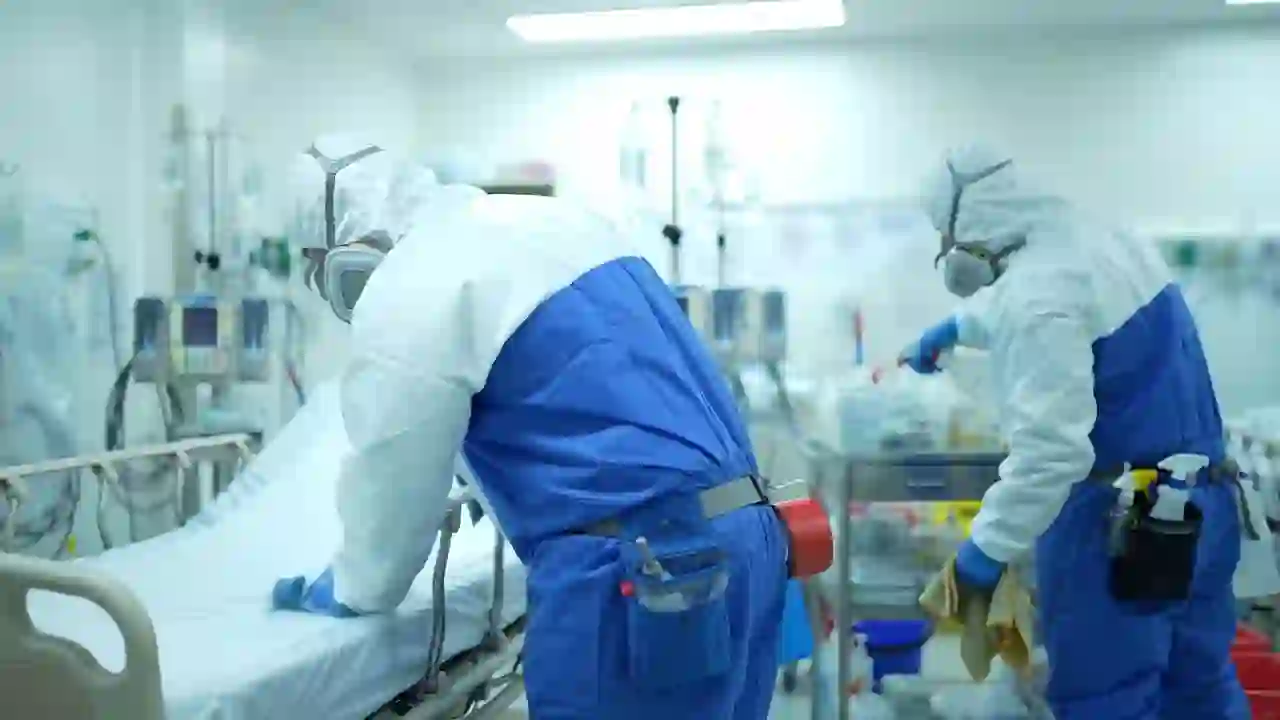
Illustrative image, not a specific customer job.Illustrative image, not a specific customer job.Illustrative image, not a specific customer job.Illustrative image, not a specific customer job.
How accident and trauma cleanup is done in Desert View
1. Assess the room and its routes
The process in Desert View is staged rather than rushed, because assessment, containment, removal, cleaning, disinfection, drying, and checking each depend on the step before them. For Desert View, the crew plans the visit around the household, including who lives in the home, who needs access to other rooms, and how timing should be arranged to reduce disruption. During assessment in Desert View, the crew notes the building type, the floor, the room layout, and the surfaces, including tile, laminate, and carpet across family rooms and bedrooms, because each of those details changes the removal and disinfection plan. The crew in Desert View rechecks adjoining rooms, hallways, and shared spaces after the main work, looking for any transfer that happened during removal or cleaning.
2. Contain the affected area
In Desert View, the crew does not treat the job as finished when the room looks clean, but when the room has been cleaned, disinfected, dried, and checked in that order. The assessment in Desert View includes a look at ceiling and wall bases, floor edges, and under-furniture areas, since fluid moves with gravity and with movement, not only where it first landed. In Desert View, ventilation during the work is controlled, so air from the affected room is not blown through the rest of the home, and the room is not left sealed and overheated without a plan. In Desert View, the crew keeps removed material separate from household waste at every stage, so that contaminated items are never placed in ordinary bins or left in a shared waste area.
3. Remove what cannot be saved
For buildings in Desert View with shared spaces, the process includes a check of corridors and lifts used during the work, so neighbors are not left with a route that was used without a final check. Removal in Desert View takes out contaminated material that cannot be disinfected, including porous items that absorbed fluid, damaged soft furnishings, and debris mixed with fluid, through a proper waste route. In Desert View, cleaning products and methods are chosen for the surfaces in the room, since tile, wood, carpet, concrete, and fixtures each respond differently to cleaning and disinfection. In Desert View, the plan is agreed with the household before work begins, including timing, access through driveways, garage entries, and shared townhome courts, privacy details, and who needs to be present at each stage.
4. Clean and disinfect what can be saved
The assessment in Desert View begins with a careful look at the affected room, the surfaces involved, and any adjoining space, so the crew understands how far fluid traveled before any removal starts. In Desert View, the assessment may reveal that an adjoining room needs work as well, and that finding is shared with the household before the scope widens, rather than after the extra work is done. Cleaning in Desert View follows removal, with surfaces washed to take away visible material before disinfection, since disinfecting a surface that still holds visible fluid is not a reliable step on its own. The work in Desert View ends only when the affected room has been checked, the summary has been given, and the household understands which rooms are ready and which, if any, need further attention.
5. Dry and recheck adjoining areas
Disinfection in Desert View is applied to hard surfaces that can be saved, with attention to joints, grout lines, fixture bases, and seams where fluid collects, rather than only to the center of a floor or wall. During the work in Desert View, the crew keeps the affected room closed to people and pets, even after visible material is gone, until disinfection and the final check are complete. Handover in Desert View includes a walk-through of the affected room, a plain-language summary of what was removed and disinfected, and clear guidance on which rooms are ready to use again. Waste handling in Desert View follows a regulated route, with removed material bagged and moved in a way that protects corridors, lifts, stairwells, and driveways from transfer.
6. Hand back with a clear summary
Documentation in Desert View records the rooms, surfaces, removals, and disinfection steps, so the household has a factual record for a landlord, a building manager, or an insurer if one is needed. For homes in Desert View with two-storey family plans with bedrooms upstairs and living below, the process accounts for connecting rooms and internal stairs, since fluid and odour can move through a home along routes that are not obvious from a single room. Drying in Desert View is checked as part of the job, since a disinfected surface that stays damp can hold odour and growth, especially where monsoon dust and sudden rain on newer suburban roofs. In Desert View, containment also protects the household routine, since other rooms can often stay in use while the affected room remains closed, provided the routes in and out of the work area are kept separate.
Warning signs to call about
Fluid in Desert View is present on a fixture base, a drain surround, or a cabinet toe-kick, where household cleaning cannot reach reliably and a professional check is needed. The household in Desert View is managing paperwork, care, or building matters at the same time, and needs a clear, staged plan rather than trying to handle a biohazard room alongside everything else.
A household member in Desert View is unsure what is safe to touch, move, or throw away in the affected room, and moving items without advice could spread contamination further. Blood or bodily fluids are visible in a room in Desert View after an injury or accident, and the room cannot be used safely until that material is removed and the surfaces are disinfected.
Broken glass, a damaged fixture, or scattered debris is mixed with fluid in Desert View, making it unsafe for the household to clear the room by hand. An accident in Desert View happened in a bathroom, kitchen, or bedroom where fixtures, cabinets, or bedding complicate cleaning, and ordinary household cleaning cannot reach every affected surface.
Odour remains in a room in Desert View after an initial clean, suggesting that fluid is still present in a seam, a joint, a fixture base, or a porous item that was not removed. A household in Desert View has kept people and pets out of the room since the accident, and now needs the room assessed, contained, cleaned, and checked before it can be used again.
Damage to a fixture, a drain, or a piece of furniture in Desert View is mixed with fluid, so the room needs both material removal and surface disinfection, not only a surface clean. A room in Desert View with tile, laminate, and carpet across family rooms and bedrooms shows fluid in transitions between surfaces, such as where tile meets wood or carpet meets a wall, and those transitions need checking even if the main surfaces look clean.
The room in Desert View cannot be ventilated normally because opening windows or running cooling would blow air from the room through the rest of the home, so professional containment is needed. Fluid in Desert View reached grout lines, wood seams, or floor edges, where it hides from view even after the center of the floor has been wiped.
What to do first
Call emergency services first if anyone in Desert View is injured or in danger, and do not start cleanup until medical help has been given and the room has been released for entry. When the crew arrives in Desert View, agree timing, access, privacy, and who will be present, and ask for the staged plan, including which rooms are included and what the final check will cover.
In Desert View, if odour, staining, or doubt returns after handover, raise it promptly and describe where it appears, rather than attempting another household clean of a room that was professionally handled. Do not place contaminated items from Desert View in ordinary household waste, and do not carry items out of the room into clean rooms, since that route spreads contamination.
If personal items in the affected room in Desert View matter to the household, mention them on the first call, so the crew can plan the assessment around items that need a decision before removal. Tell the call handler in Desert View about the building type, the floor, and the access route, including driveways, garage entries, and shared townhome courts, so the visit can be planned without delay or unnecessary disturbance.
After the work in Desert View is complete, follow the handover guidance, use only the rooms confirmed as ready, and leave any flagged item or area untouched until a further check if one is advised. If a landlord, building manager, or insurer needs to know about the room in Desert View, note the facts plainly and wait for the assessment summary, rather than making promises about the room before it is checked.
Close the affected room in Desert View, keep people and pets out of it, and leave furniture, bedding, and other items in place, since moving items can spread fluid to clean areas. Stay out of the affected room in Desert View while waiting, and arrange for other rooms to be used instead, so the household routine can continue without entering the closed room.
Call to describe the situation in Desert View in general terms, naming the room, the surfaces involved, whether broken glass or a damaged fixture is present, and how the crew can reach the property. Keep a note of which rooms adjoin the affected room in Desert View, and mention any hallway, shared corridor, or neighboring unit that fluid or odour may have reached.
Do not run fans or a cooling system in Desert View in a way that blows air from the affected room through the rest of the home, and do not open the room to general use while waiting. Avoid mopping, vacuuming, bleaching, or wiping the room in Desert View yourself, because household cleaning can spread fluid into seams and porous material while leaving contamination hidden.
When accident and trauma cleanup is needed in Desert View
For example, a household in Desert View might find that fluid from a bathroom accident reached tile joints, a fixture base, and a hallway runner, and the plan would need to cover the bathroom, the runner, and the hallway edge together. In that illustration, the crew in Desert View would still start with emergency-first confirmation, then assessment and containment, before any removal or disinfection, and the household would receive a summary naming what was removed and what was disinfected. In that same illustration, planning for Desert View would account for suburban homes and townhomes on the northern residential edge, for surfaces including tile, laminate, and carpet across family rooms and bedrooms, and for access through driveways, garage entries, and shared townhome courts, so staging, removal, and the final check fit that property rather than a generic routine.
For example, a household in Desert View might deal with fluid that reached a tiled entry, a coat closet, and a living room rug in one movement, and the plan would cover all three areas rather than only the first visible patch. In that illustration, the crew in Desert View would still start with emergency-first confirmation, then assessment and containment, before any removal or disinfection, and the household would receive a summary naming what was removed and what was disinfected. In that same illustration, planning for Desert View would account for suburban homes and townhomes on the northern residential edge, for surfaces including tile, laminate, and carpet across family rooms and bedrooms, and for access through driveways, garage entries, and shared townhome courts, so staging, removal, and the final check fit that property rather than a generic routine.
For example, a household in Desert View might face an accident in a guest room that is rarely used, where fluid sat in a closed room and conditions inside changed before anyone noticed the full extent. In that illustration, the crew in Desert View would still start with emergency-first confirmation, then assessment and containment, before any removal or disinfection, and the household would receive a summary naming what was removed and what was disinfected. In that same illustration, planning for Desert View would account for suburban homes and townhomes on the northern residential edge, for surfaces including tile, laminate, and carpet across family rooms and bedrooms, and for access through driveways, garage entries, and shared townhome courts, so staging, removal, and the final check fit that property rather than a generic routine.
Scenarios above are hypothetical illustrations, not real customer jobs.
Accident and trauma cleanup in Desert View: questions people ask
How does the building type in Desert View change accident and trauma cleanup?
The handover summary for Desert View names the rooms handled, the items removed, the surfaces disinfected, and any room or item that still needs attention, in plain language that can be passed to a landlord, manager, or insurer. Discretion in Desert View is agreed on the first call, including timing, staging, and waste handling, so the visit does not draw unnecessary attention to the household or disturb neighbors more than necessary. In Desert View, hard surfaces that can be disinfected are often saved, while porous items that absorbed fluid are more likely to be removed, and that distinction is explained before removal begins. The building type in Desert View shapes access, containment, and routes, since suburban homes and townhomes on the northern residential edge and driveways, garage entries, and shared townhome courts together decide how the crew stages, enters, and removes material without crossing clean areas.
What should I do in Desert View if odour remains after an initial wipe of the room?
In Desert View, the household is told what not to do after handover as well as what was done, including leaving any flagged item untouched until a further check if advised. In Desert View, fixtures and cabinets near the affected area are checked, because fluid can collect at fixture bases, cabinet toe-kicks, and drain surrounds. The assessment in Desert View also notes whether plumbing or a fixture was damaged in the accident, since damage can extend the affected area or complicate disinfection. On the first call about Desert View, the most useful details are the room, the surfaces involved, whether broken glass or a damaged fixture is present, the building type, the floor, and the access route.
How does the climate in Phoenix affect a trauma room in Desert View while waiting?
A room in Desert View is ready to use again after cleaning, disinfection, drying, and a final check, plus a plain-language summary confirming which rooms are ready and which, if any, need further attention. In Desert View, soft items near the affected area are judged on whether disinfection can reach inside them, and items where it cannot are removed rather than left with doubt attached. In Desert View, odour is treated as information, since its location and strength can point to fluid hidden in a seam, a fixture, or a porous item. If odour remains in Desert View after an initial wipe, it may point to fluid still hidden in a seam, a joint, a fixture base, or a porous item, and a professional assessment is needed rather than another household wipe.
What if broken glass or a damaged fixture is mixed with fluid in Desert View?
In Desert View, drying is checked as part of the job, since a surface that stays damp after disinfection can hold odour and growth. For a household in Desert View, early, honest description of the room helps the crew plan access, containment, and removal, and often shortens the overall job. In Desert View, the crew does not treat a room as finished when it looks clean, but when it has been cleaned, disinfected, dried, and checked in that order. In Desert View, the room should stay closed while waiting, with people and pets kept out, because entering or moving items in the room can spread fluid and complicate the later work.
Can cleanup in Desert View be handled discreetly in a shared building or close neighborhood?
In Desert View, carpet padding, bedding, and upholstered items that absorbed fluid are often removed through a proper waste route, because disinfection cannot be relied on inside porous material. In Desert View, the crew explains the scope before work begins, including which rooms are included, which items are likely to be removed, and what the final check will cover. For homes in Desert View with two-storey family plans with bedrooms upstairs and living below, connecting rooms and internal stairs are part of the plan, since fluid and odour can move through a home along routes not obvious from one room. Emergency help comes first in Desert View, without exception, and cleanup begins only after the injured person is safe and the room has been released for entry.
What comes first in Desert View after an accident at home, emergency help or cleanup?
In Desert View, the household should not place contaminated items in ordinary household waste, and removed material is handled through a proper regulated route. In Desert View, a household that keeps the room closed, keeps pets out, and leaves items in place gives the crew the clearest starting point for assessment. Containment in Desert View keeps the affected room separate from the rest of the home, so removal and disinfection do not spread fluid into hallways, neighboring rooms, or shared building spaces. Household wiping in Desert View can spread fluid into grout, seams, and porous material, so the safer course is to leave the room untouched and let the assessment establish what needs removal and what can be disinfected.